

| Rus |  |
Eng |  |
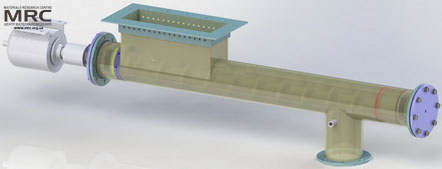 Materials Research Centre developes, designs and manufactures screw conveyors and screw feeders for materials supply into technology line.
A screw conveyor is a device used in various industries to accurately meter or feed amorphous or loose grained materials from one part of a process to another.
A screw conveyor or auger conveyor is a mechanism that uses a rotating helical screw blade, mounted on a central shaft driven by different methods. This assembly rotates inside a tube fitted with a feeder mechanism at one end. Material is added at the feed end of the device and is transported to the discharge end by a process of positive displacement.
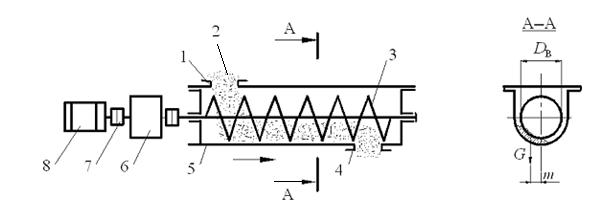
A feed screw is a component of certain types of industrial machinery that is designed to move, or feed, materials through a tube. Typically, a feed screw is a metal cylinder with an incline plane wound around its outside, resembling a long screw or auger.
Horizontal Screw conveyor.
Screw feeder basic function is moving of coke from the receiving bin into the calcination furnace. Source material inlet is designed for bulk materials loading. Auger moves bulk materials. Screw feeder outlet is designed to discharge processed material.
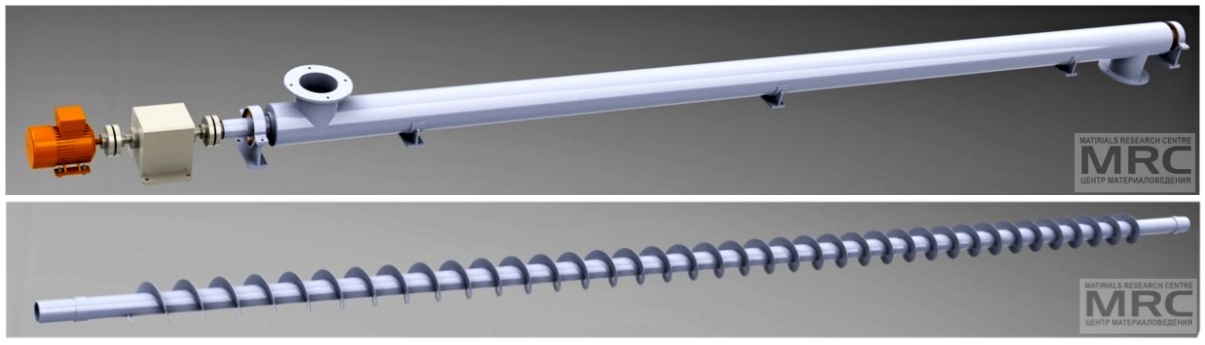
Horizontal screw conveyor operates as follows:
Bulk material (coke) enters the source material inlet. After that it is conveyed by rotation of the auger into the screw outlet, where it is discharged from.
The source material is fed into a through, and is moving along it by rotating of the through. Screw feeder principle is applying of axial driving force.
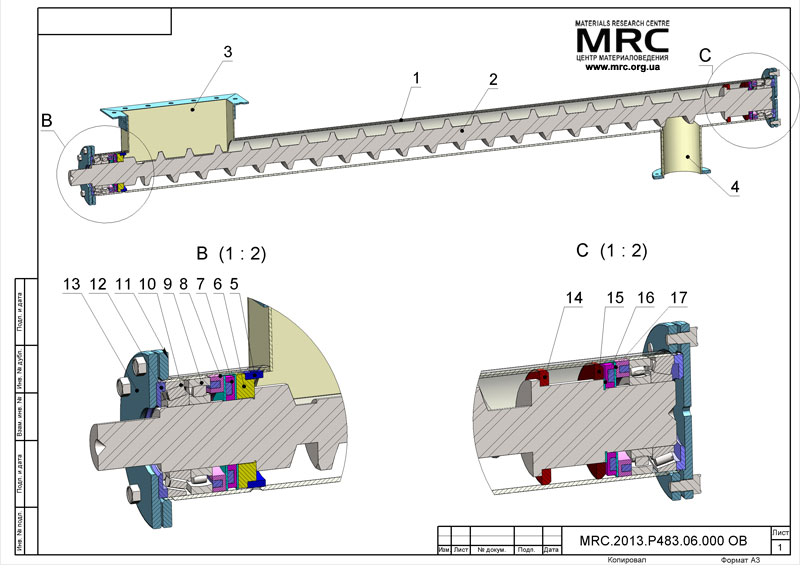
Screw conveyor design have openings for maintenance. Screw conveyor should have a collapsible design (or at least allow for) to provide for maintenance when necessary.
Screw conveyor unit consists of:
- source material inlet
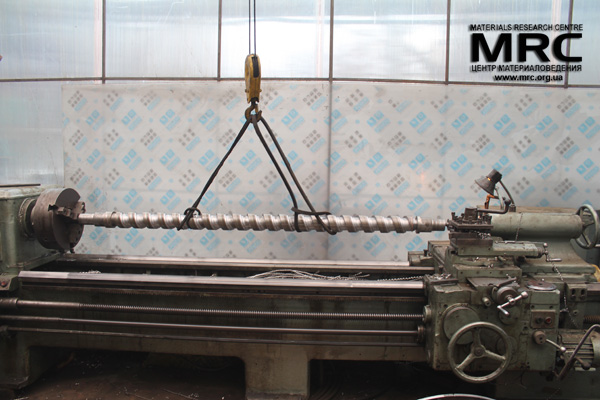
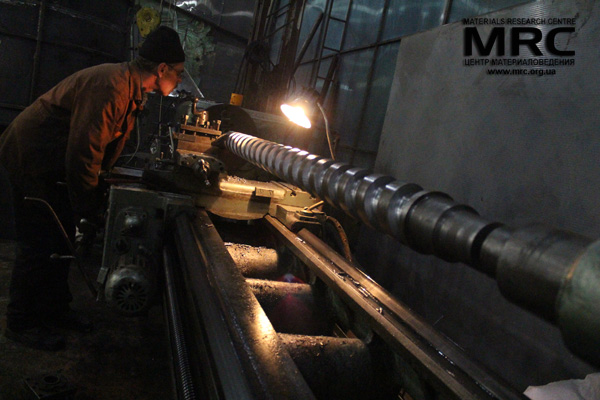
- rotating helical screw blade (auger)
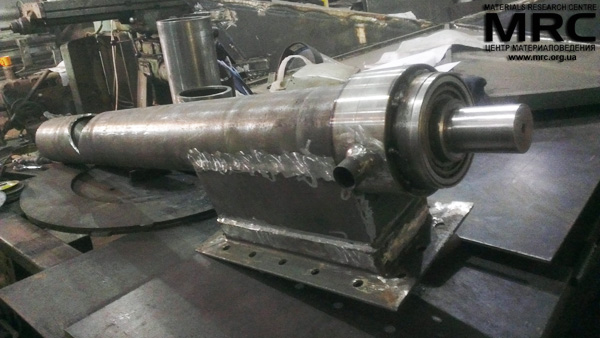
- ball bearings
- screw feeder outlet (for processed material)
- through (tube)
- screw feeder composes: electric motor, reduction drive and two couplings.
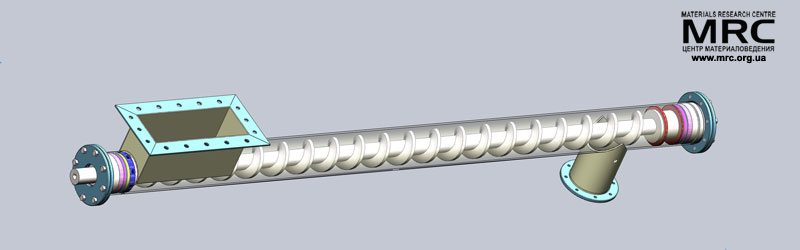
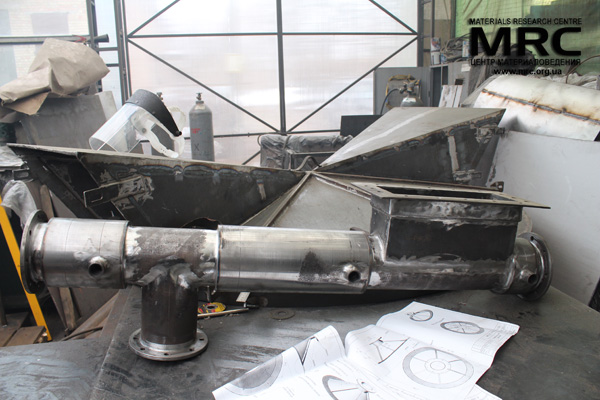
Horizontal screw conveyor (closed), 2 meters
Horizontal screw conveyor was developed and manufactured for coke supply into technological line.
The initial step in engineering a Screw feeder is to analyze the physical characteristics of the material and the rate at which it is to be handled.
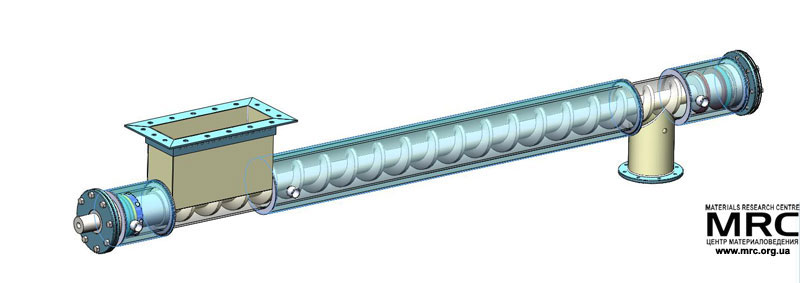
Our engineers are available to assist you in every way possible to determine your best feeder design. Since the Screw feeder selected is based on a maximum volume control of material to be handled, surge loads, overloads and choke feeding must be accounted for in the screw feeder design.
We determine your material classification and required capacity. After size is determined then is determined exact screw feeder speed.
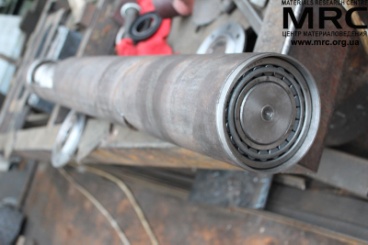
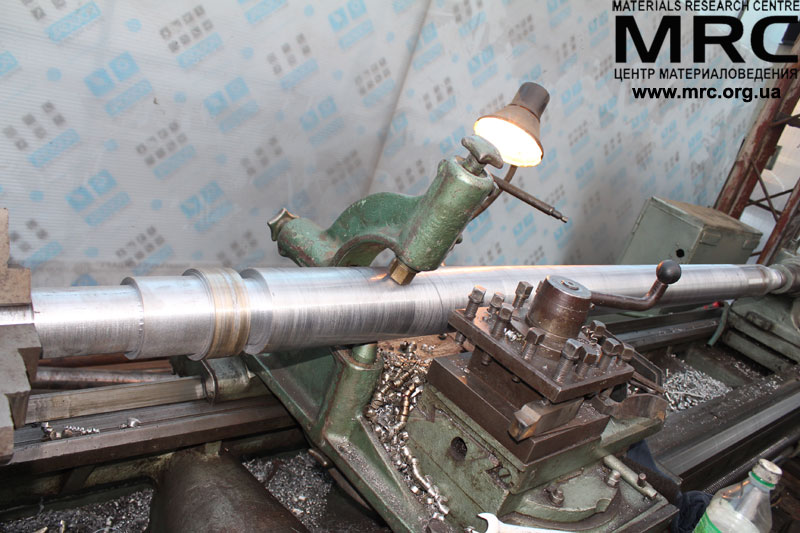
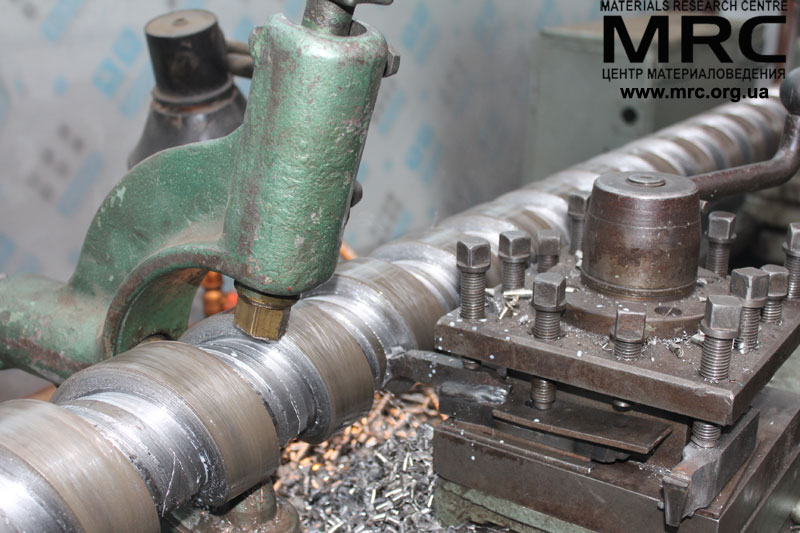
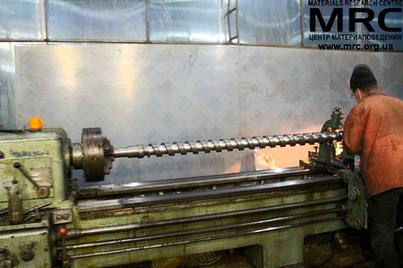
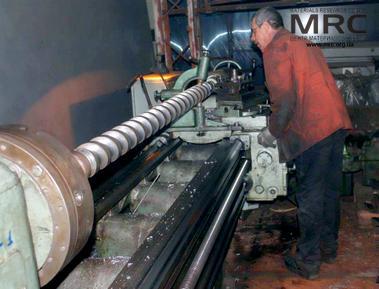
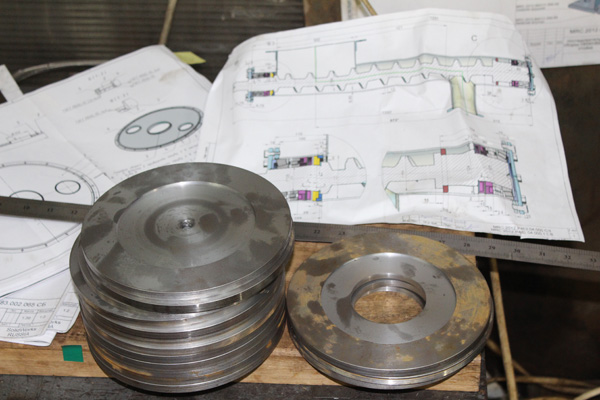
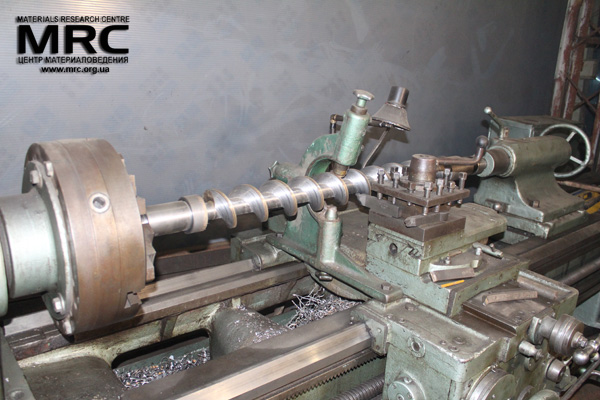
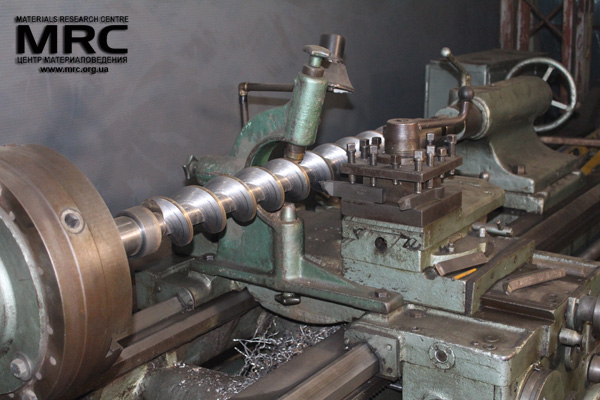
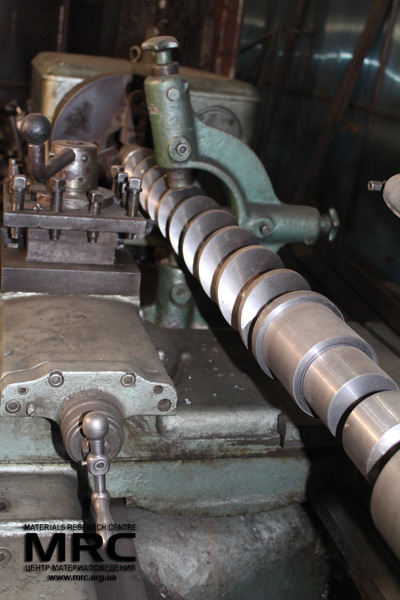
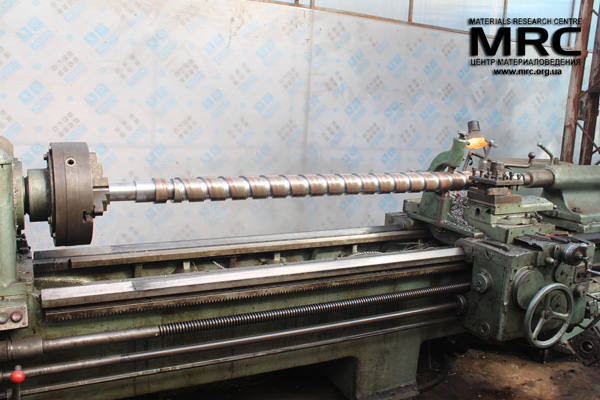
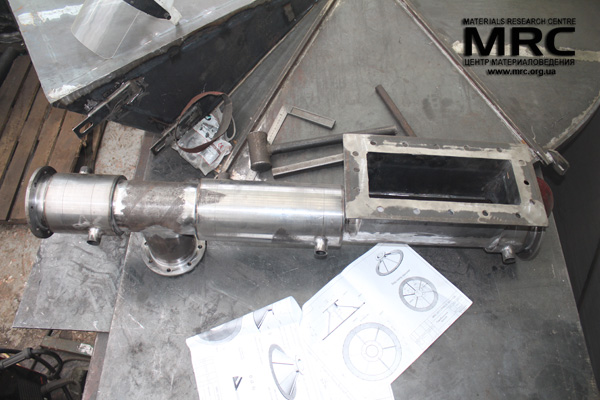
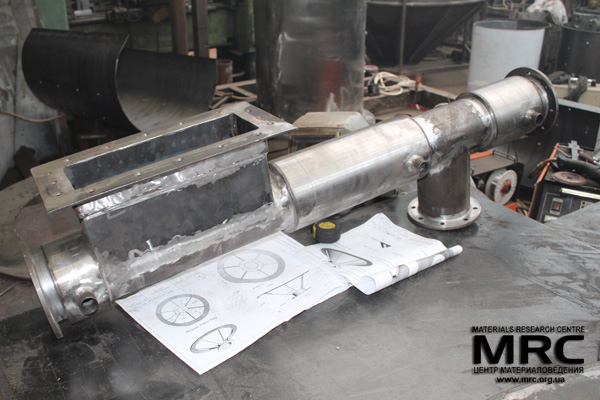
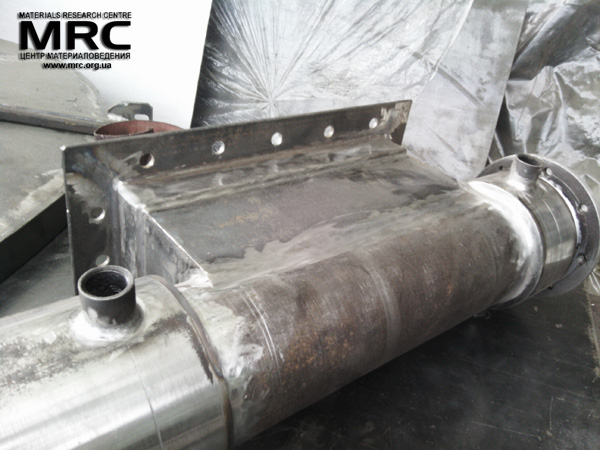
Manufacturing of the screw feeders parts, photos by Materials Research Centre.



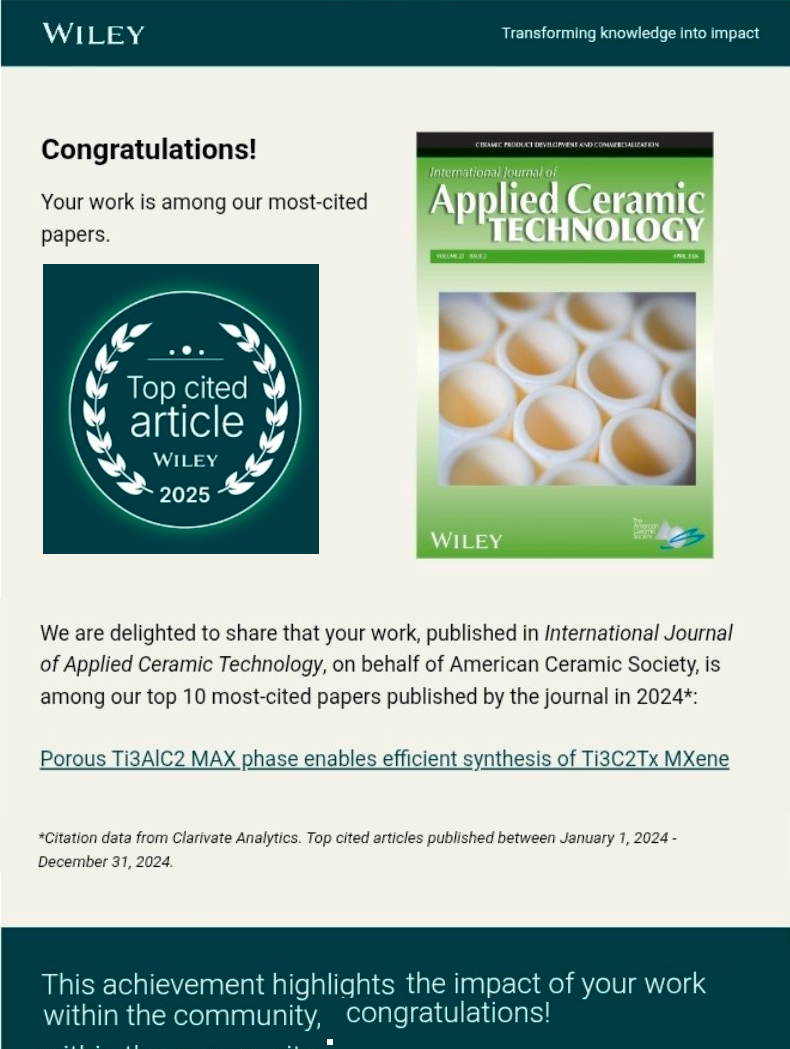 Our collaborative work on porous Ti₃AlC₂ MAX phase for efficient Ti₃C₂Tₓ MXene synthesis has been ranked among the Top 10 most cited papers in the International Journal of Applied Ceramic Technology (IJACT).
 We highly recommend checking out new important paper: “Critical Assessment of Intrinsic Antibacterial Properties and Photothermal Therapy Potential of MXene Nanosheets.” Along with the key findings, we’re also excited to share the Supplementary Cover Art — it beautifully illustrates our vision of MXene-based targeted complexes that can eliminate bacteria via photothermal conversion under near-infrared irradiation.
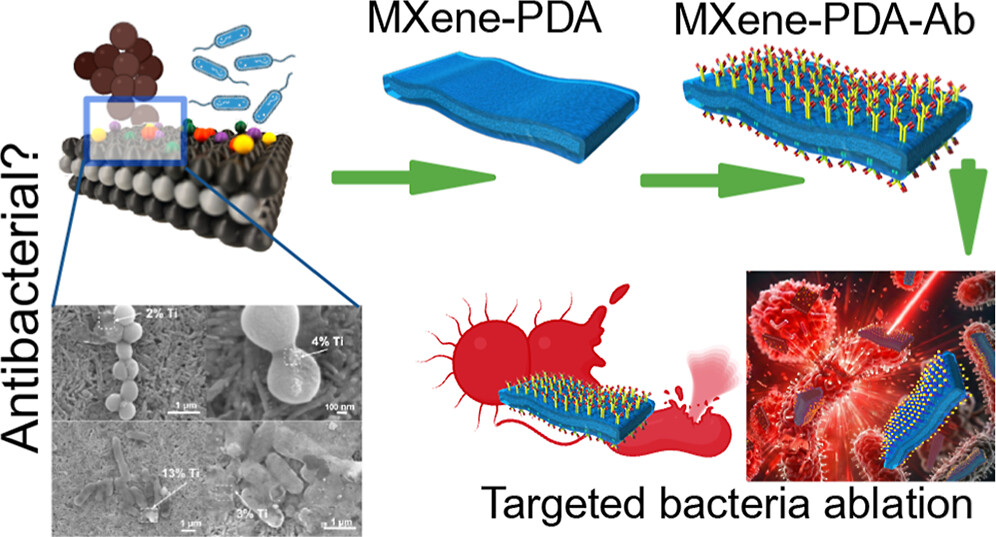 Do MXene nanosheets possess intrinsic antibacterial activity? A systematic study of high-quality Ti-, V-, and Nb-based MXenes reveals negligible inherent antimicrobial effects while highlighting their strong potential for targeted photothermal antibacterial therapy.
 Highlights
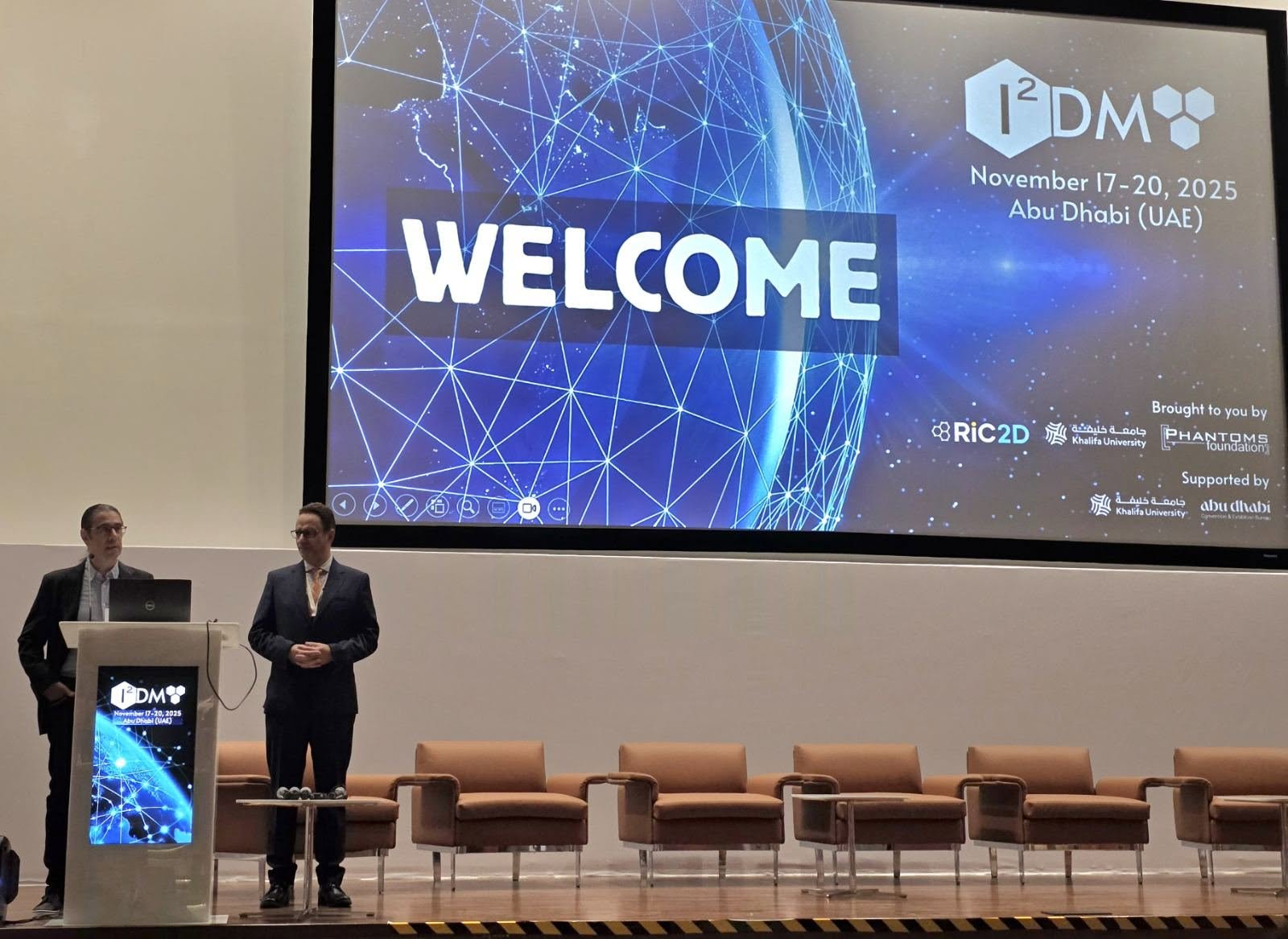 We are excited to share that our Carbon-Ukraine (Y-Carbon LLC) company participated in the I2DM Summit and Expo 2025 at Khalifa University in Abu-Dhabi! Huge thanks to Research & Innovation Center for Graphene and 2D Materials (RIC2D) for hosting such a high-level event.It was an incredible opportunity to meet brilliant researchers and innovators working on the next generation of 2D materials. The insights and energy from the summit will definitely drive new ideas in our own development.
 Carbon-Ukraine team had the unique opportunity to visit XPANCEO - a Dubai-based deep tech startup company that is developing the first smart contact lenses with AR vision and health monitoring features, working on truly cutting-edge developments.
 Our Carbon-Ukraine team (Y-Carbon LLC) are thrilled to start a new RIC2D project MX-Innovation in collaboration with Drexel University Yury Gogotsi and Khalifa University! Amazing lab tours to project collaborators from Khalifa University, great discussions, strong networking, and a wonderful platform for future collaboration.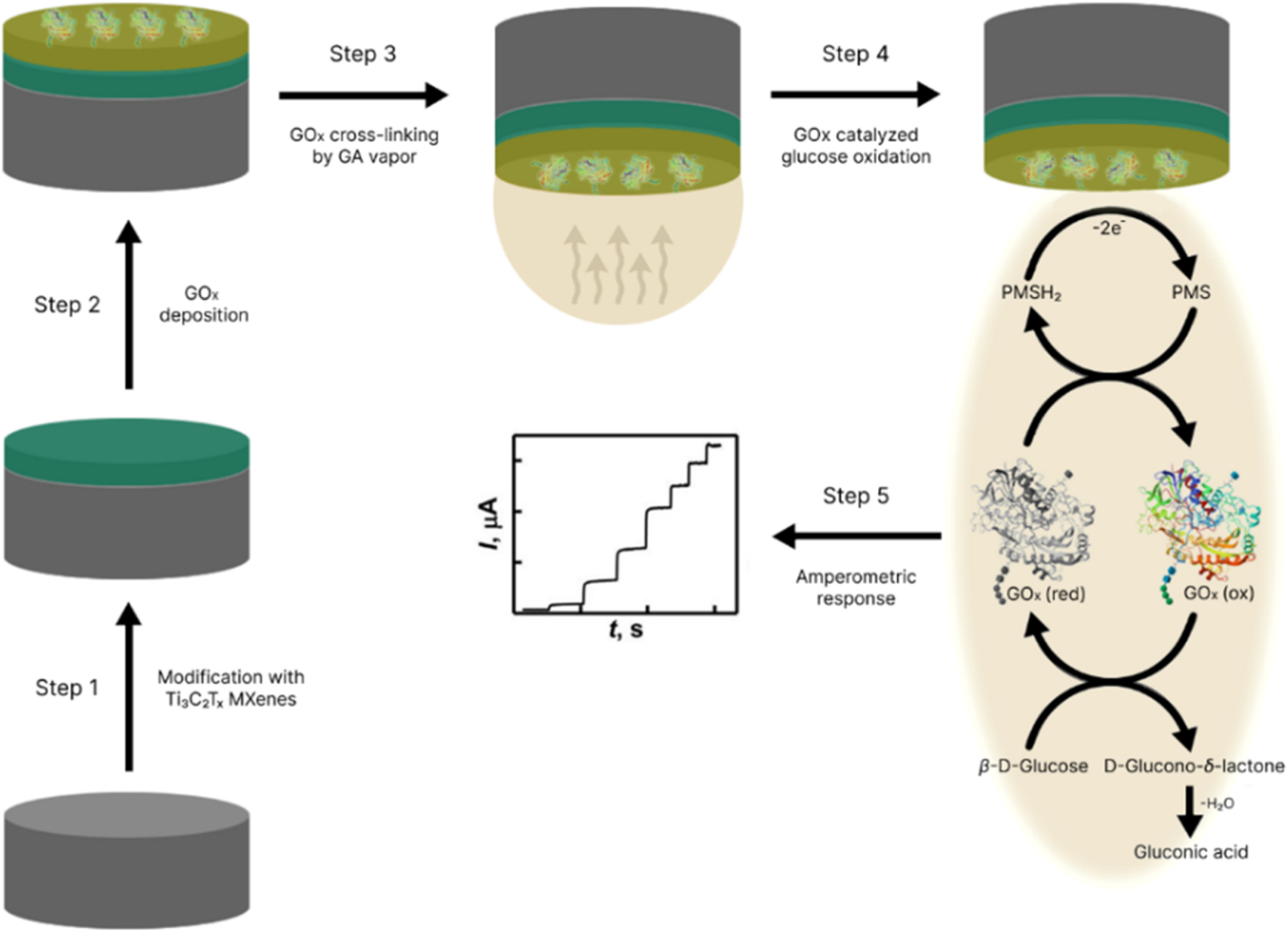
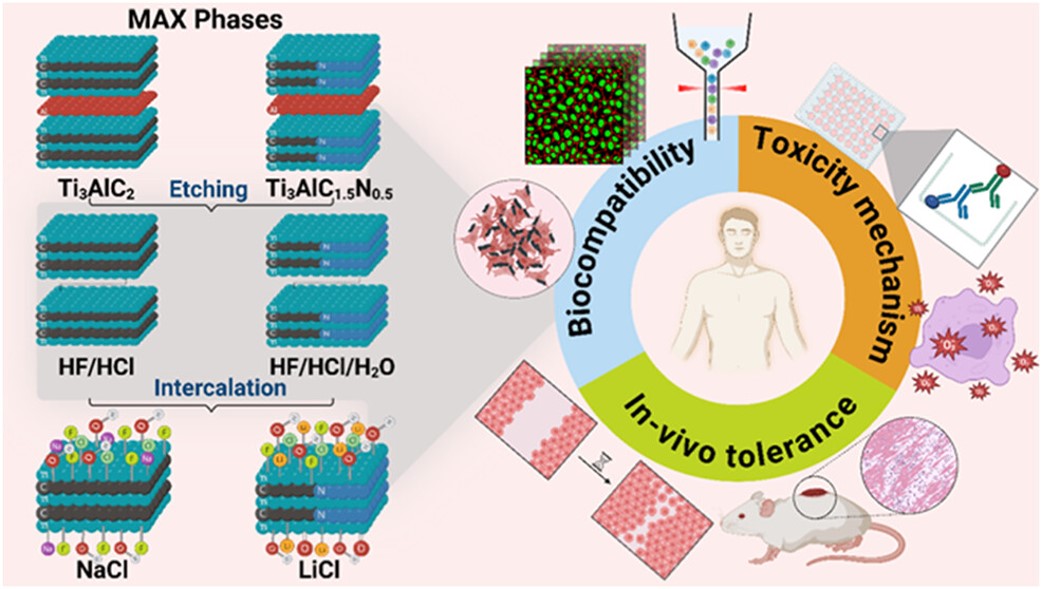 MXenes potential applications include sensors, wound healing materials, and drug delivery systems. A recent study explored how different synthesis methods affect the safety and performance of MXenes. By comparing etching conditions and intercalation strategies, researchers discovered that fine-tuning the surface chemistry of MXenes plays a crucial role in improving biocompatibility. These results provide practical guidelines for developing safer MXenes and bring the field one step closer to real biomedical applications.
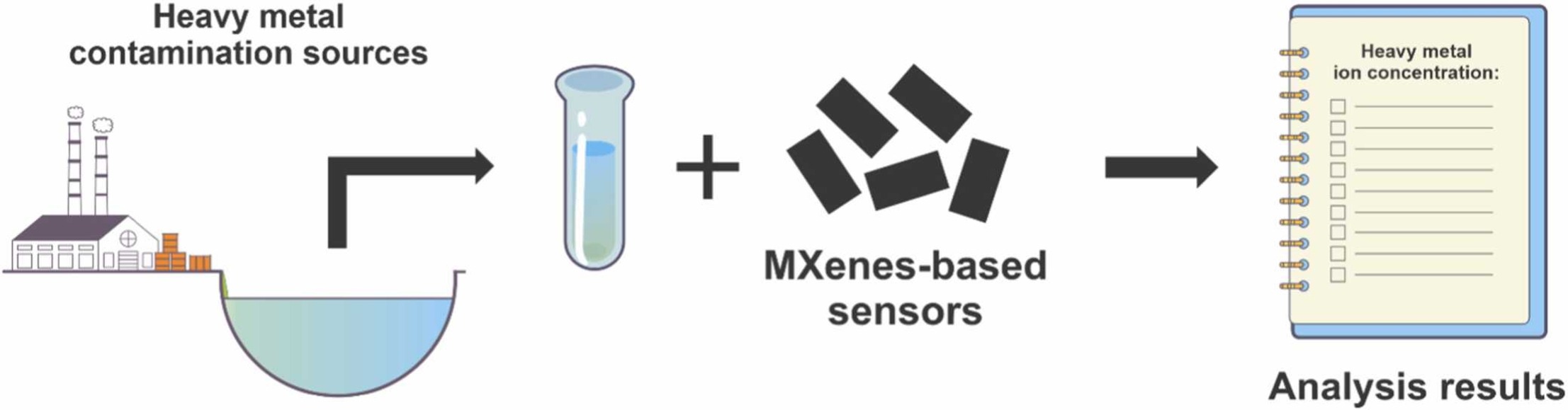 An excellent review highlighting how MXene-based sensors can help tackle one of today’s pressing environmental challenges — heavy metal contamination. Excited to see such impactful work moving the field of environmental monitoring and sensor technology forward!
 Carbon-Ukraine team was truly delighted to take part in the kickoff meeting of the ATHENA Project (Advanced Digital Engineering Methods to Design MXene-based Nanocomposites for Electro-Magnetic Interference Shielding in Space), supported by NATO through the Science for Peace and Security Programme.
 Exellent news, our joint patent application with Drexel University on highly porous MAX phase precursor for MXene synthesis published. Congratulations and thanks to all team involved!
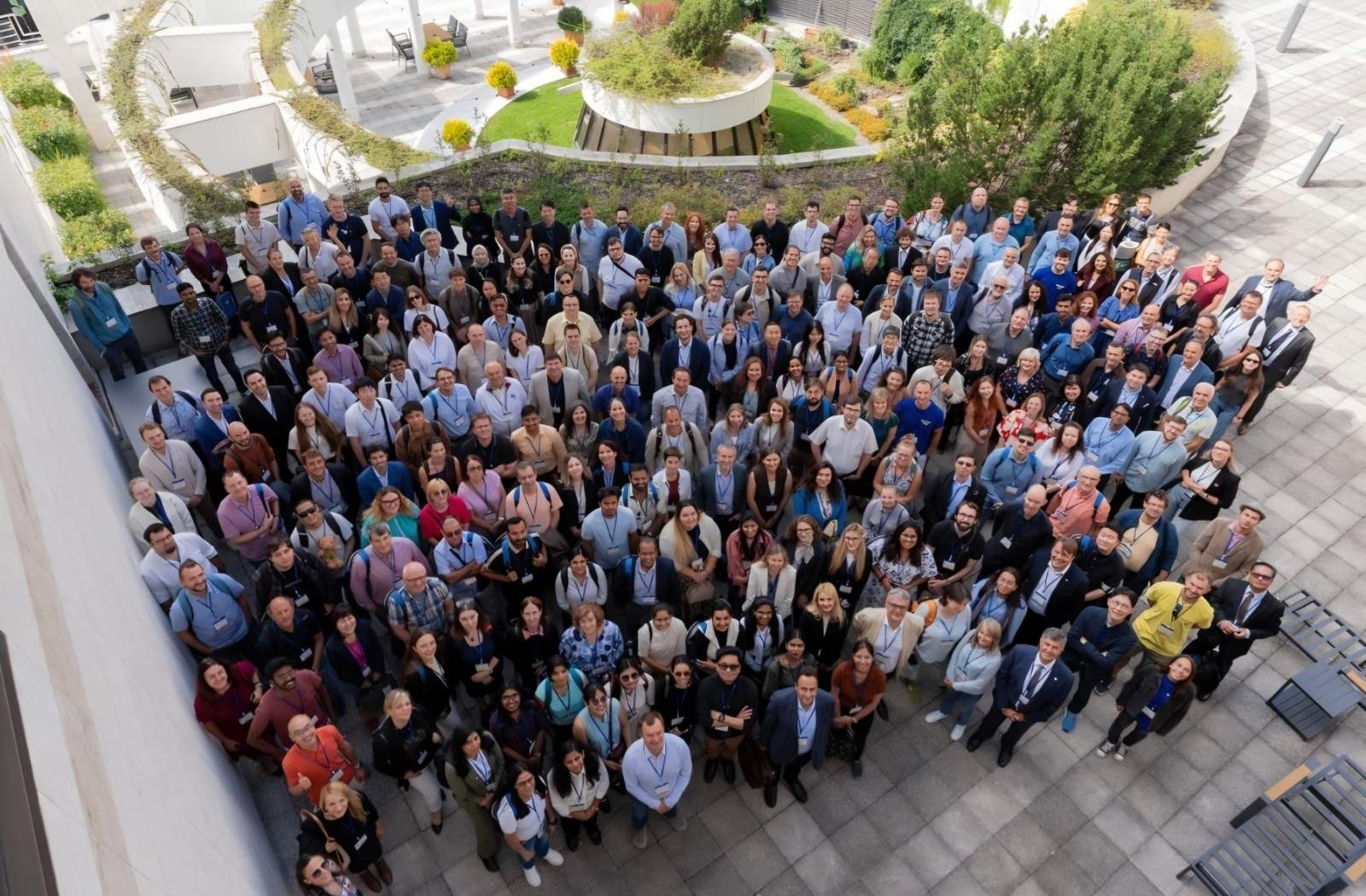 Our team was very delighted to take part in International Symposium "The MXene Frontier: Transformative Nanomaterials Shaping the Future" – the largest MXene event in Europe this year!
 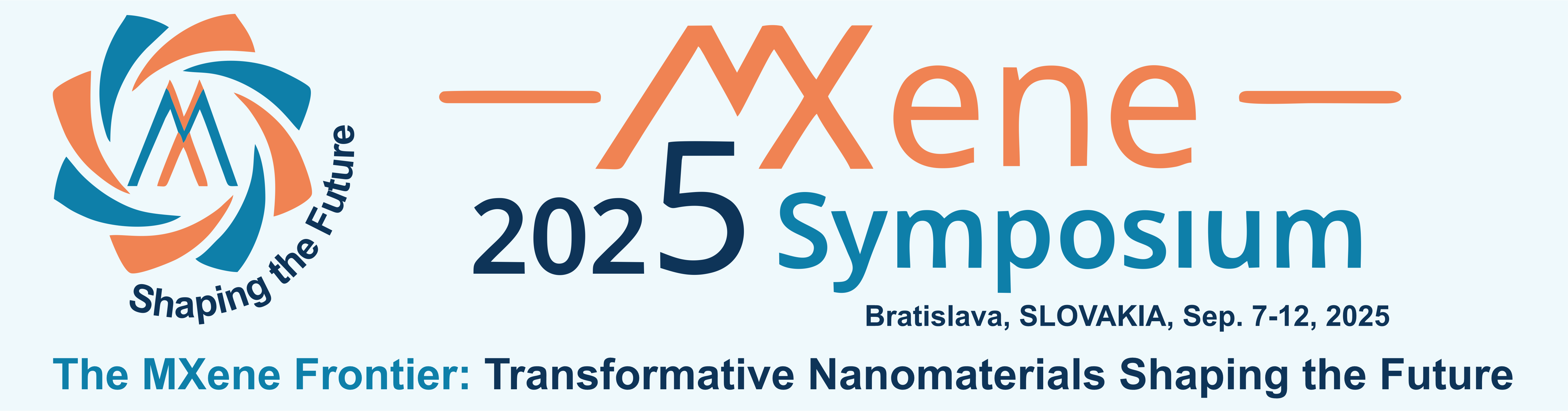 Last Call! Have you submitted your abstract for IEEE NAP-2025 yet? Join us at the International Symposium on "The MXene Frontier: Transformative Nanomaterials Shaping the Future" – the largest MXene-focused conference in Europe this year! Final Submission Deadline: May 15, 2025. Don’t miss this exclusive opportunity to showcase your research and engage with world leaders in the MXene field!